
Value is getting created on infrastructure layer of AI, says Plexo Capital’s Lo Toney
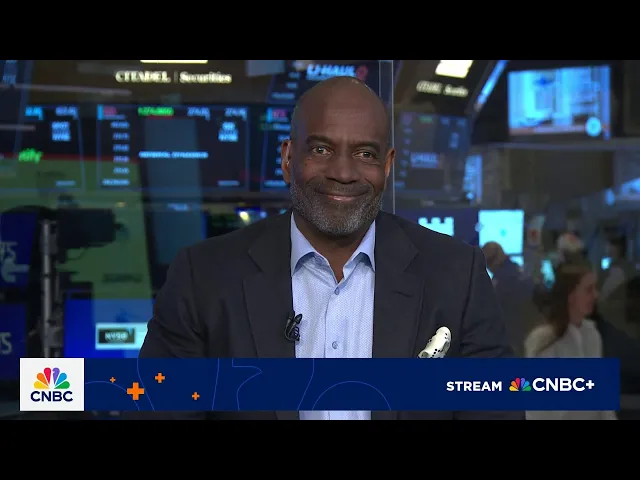
Value flows to AI infrastructure, not startups
In the constantly evolving landscape of artificial intelligence investment, a critical shift is occurring that savvy investors and business leaders need to recognize. Lo Toney of Plexo Capital recently shared insights that challenge conventional wisdom about where the most significant value creation is happening in the AI ecosystem. Rather than application-layer startups capturing the lion's share of value, infrastructure providers are emerging as the true winners in this technological revolution.
Key Points
-
Infrastructure providers like Nvidia are capturing disproportionate value in the AI ecosystem through their essential hardware and computing resources, while application-layer companies face commoditization pressure.
-
AI startups face a "squeeze" scenario where they must generate substantial revenue to offset high infrastructure costs while competing against well-funded incumbents who can rapidly replicate their innovations.
-
Venture capital investments in AI applications may face diminishing returns as the barriers to entry decrease and differentiation becomes more challenging in an increasingly crowded market.
The Infrastructure Advantage
The most compelling insight from Toney's analysis is the fundamental economic imbalance emerging in AI value creation. While media attention often focuses on flashy AI applications and use cases, the companies providing the underlying computational infrastructure—particularly Nvidia with its specialized GPUs—are positioning themselves to capture the majority of economic benefits.
This matters tremendously because it represents a departure from previous technology paradigms. In the mobile revolution, application developers could create substantial value with relatively modest infrastructure investments. The AI landscape operates differently: computational requirements for training and running sophisticated models are extraordinarily resource-intensive, creating a toll-bridge dynamic where infrastructure providers collect "taxes" on virtually all AI innovation.
For business leaders, this suggests a fundamental rethinking of AI strategy. Rather than viewing AI primarily as a software or applications play, the hardware and infrastructure components deserve equal if not greater strategic consideration.
Beyond the Infrastructure Thesis
What Toney's analysis doesn't fully address is the potential for specialized AI applications in regulated industries to maintain higher margins. While general-purpose AI applications may face commoditization, domain-specific solutions in healthcare, finance, and other highly regulated sectors could sustain premium pricing due to specialized knowledge requirements and regulatory barriers to entry.
For example, Tempus in healthcare oncology has built significant value by combining AI capabilities with proprietary clinical data
Recent Videos
Andrej Karpathy on the Decade of Agents, the Limits of RL, and Why Education Is His Next Mission
A summary of key takeaways from Andrej Karpathy's conversation with Dwarkesh Patel In a wide-ranging conversation with Dwarkesh Patel, Andrej Karpathy — former head of AI at Tesla, founding member of OpenAI, and creator of some of the most popular AI educational content on the internet — shared his views on where AI is headed, what's still broken, and why he's now pouring his energy into education. Here are the key takeaways. "It's the Decade of Agents, Not the Year of Agents" Karpathy's now-famous quote is a direct pushback on industry hype. Early agents like Claude Code and Codex are...
Oct 6, 2025How To Earn MONEY With Images (No Bullsh*t)
Smart earnings from your image collection In today's digital economy, passive income streams have become increasingly accessible to creators with various skill sets. A recent YouTube video cuts through the hype to explore legitimate ways photographers, designers, and even casual smartphone users can monetize their image collections. The strategies outlined don't rely on unrealistic promises or complicated schemes—instead, they focus on established marketplaces with proven revenue potential for image creators. Key Points Stock photography platforms like Shutterstock, Adobe Stock, and Getty Images remain viable income sources when you understand their specific requirements and optimize your submissions accordingly. Specialized marketplaces focusing...
Oct 3, 2025New SHAPE SHIFTING AI Robot Is Freaking People Out
Liquid robots will change everything In the quiet labs of Carnegie Mellon University, scientists have created something that feels plucked from science fiction—a magnetic slime robot that can transform between liquid and solid states, slipping through tight spaces before reassembling on the other side. This technology, showcased in a recent YouTube video, represents a significant leap beyond traditional robotics into a realm where machines mimic not just animal movements, but their fundamental physical properties. While the internet might be buzzing with dystopian concerns about "shape-shifting terminators," the reality offers far more promising applications that could revolutionize medicine, rescue operations, and...