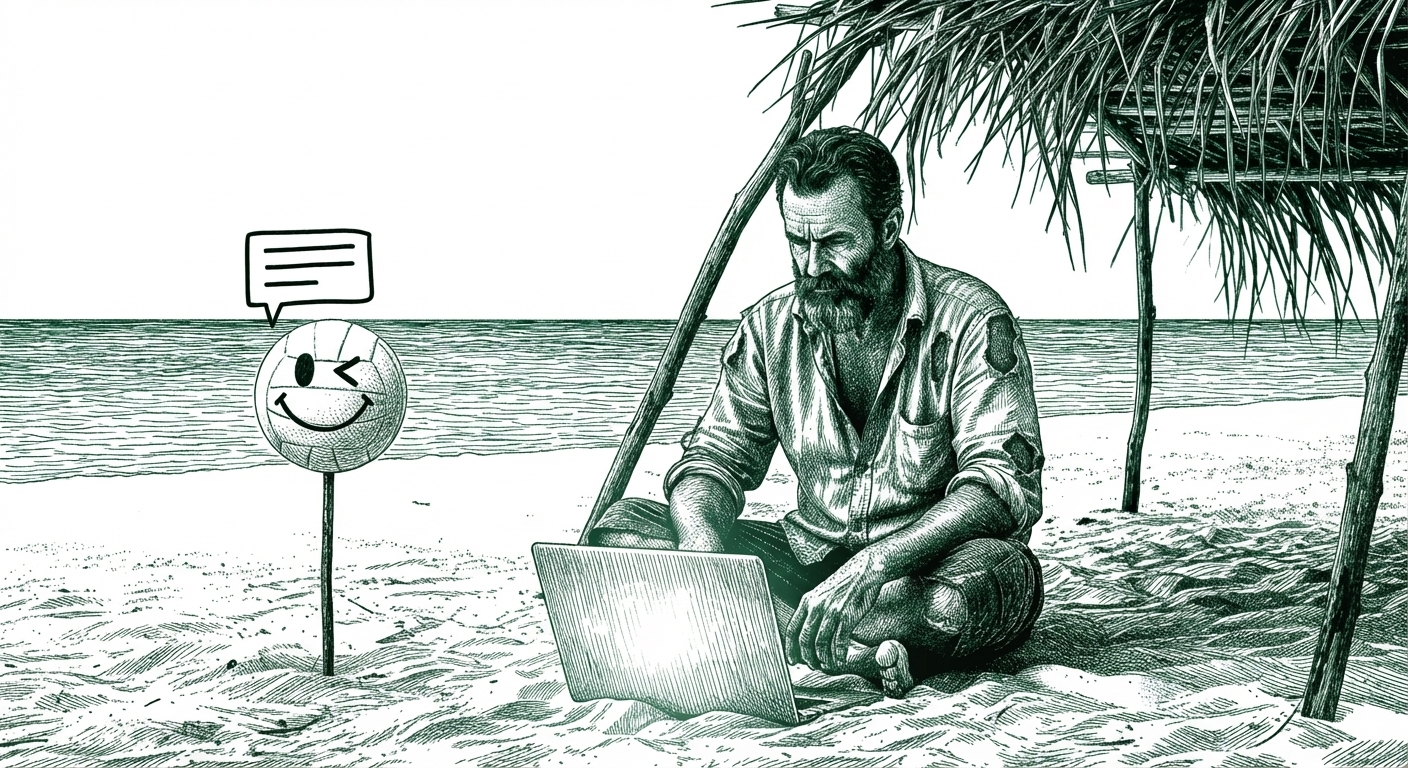
The Mac Mini Is Sold Out. The Org Chart Is Open Source. And the Ads Are Learning Your Name
The entire technology stack is reorganizing around the one-person company. Apple sells you the hardware. Google gives you the brain.

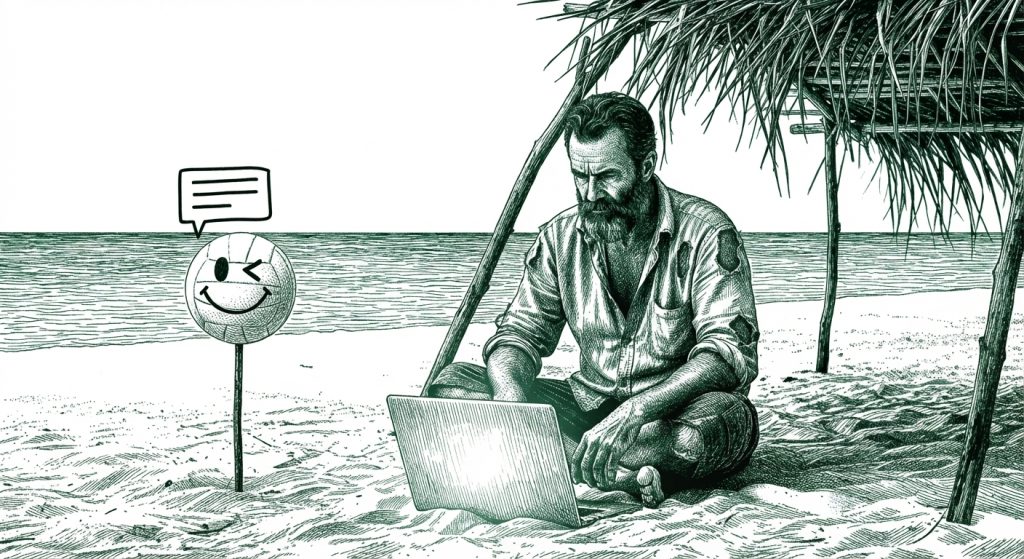
The entire technology stack is reorganizing around the one-person company. Apple sells you the hardware. Google gives you the brain. Cursor gives you the engineering team. Paperclip gives you the org chart. And OpenAI monetizes whatever’s left of the relationship. The future is bright — as long as you like being alone.
THE NUMBER: 38,000 — GitHub stars on Paperclip in its first 28 days. Paperclip is an open-source tool that lets you model a company — org chart, budgets, governance, goals — and then populate every seat with an AI agent. Not a dev tool. Not a chatbot. A headless corporation. 38,000 developers looked at “open-source orchestration for zero-human companies” and hit the star button in less than a month. That’s not a repo. That’s a referendum.
🍎 The Arms Dealer in a Gold Rush
Try buying a Mac Mini right now. Go ahead. We’ll wait.
You can’t. The base models are gone from Apple Stores. The higher-memory configurations — the ones AI developers actually want — are backordered six weeks. Apple will almost certainly refresh the machine again this year, which means they’re clearing old inventory at full price while the next generation prints money on pre-orders. Tim Cook is the arms dealer in a gold rush, and he’s selling picks and shovels to every vibe coder, local-model runner, and solopreneur-with-agents who walks through the door.
But here’s the move that makes Apple the most interesting company in this story: they’re winning on both sides of the bet. The same week they’re selling out the hardware that lets anyone build anything, they pulled Anythng from the App Store, blocked Replit and Vibecode from releasing updates, and rejected even a workaround where generated apps would open in a browser. Apple told The Information that vibe coding features breach long-standing rules prohibiting apps from executing code that alters their own functionality. Translation: build whatever you want on our hardware. We decide if anyone gets to use it.
This isn’t a contradiction. It’s the business model. Apple encourages creation — sell more Mac Minis — and controls distribution — own the App Store. They’re commoditizing the generation layer while monopolizing the distribution layer. RevenueCat reported 40% growth in a single month, driven by AI tailwinds filling the App Store with new apps. Apple takes 30% of every one.
As The Deep View put it: Apple just “forced a reckoning on vibe coding.” But the reckoning isn’t about code quality. It’s about who gets to be the gatekeeper when everyone can build. The answer, as usual, is Apple.
What this means for you: If you’re building products with AI-generated code, your distribution strategy matters more than your development stack. Apple just demonstrated that the bottleneck isn’t creation — it’s access to the customer. The solopreneur who can build an app in a weekend on a Mac Mini still needs Apple’s permission to reach a single iPhone. Plan accordingly.
⚡ Google Just Made Your Mac Mini a Real AI Workstation
While Apple sells the hardware, Google just provided the brain. Gemma 4 dropped today — and the headline isn’t the benchmarks. It’s the license.
For two years, Google’s Gemma models shipped under custom terms that sent enterprise legal departments running toward Mistral or Alibaba’s Qwen instead. “Open with asterisks” isn’t the same as open. Gemma 4 ships under Apache 2.0 — the same genuinely permissive license used by the rest of the open-weight ecosystem. No custom clauses, no “Harmful Use” carve-outs requiring legal interpretation, no restrictions on redistribution or commercial deployment. For the first time, Google is playing on the same terms as everyone else — and doing it the same week Chinese labs like Alibaba are pulling back from fully open releases.
The model that matters most for our story is the 26B A4B — a Mixture-of-Experts variant that delivers 27-billion-parameter intelligence at the inference cost of a 4-billion-parameter model. It scores 88.3% on AIME 2026 (rigorous mathematical reasoning) and 77.1% on LiveCodeBench. It supports 256K-token context windows, native vision, and — critically — native function calling trained from the ground up for multi-turn agentic workflows. Not prompt-engineered tool use. Actual, architecture-level agent capability.
Why does this matter for the sold-out Mac Mini? Because you can run this model locally. NVIDIA collaborated with Ollama and llama.cpp to optimize Gemma 4 for consumer GPUs and DGX Spark. The smaller edge models (E2B and E4B) run on phones and Raspberry Pis. The 26B MoE variant runs on an RTX desktop or, with quantization, on the Mac Mini that’s backordered because everyone figured out what’s coming.
Here’s what’s coming: a legitimately powerful AI model, running offline, for free, commercially, on hardware you already own. No API key. No subscription. No data leaving your machine. Since Gemma’s launch two years ago, the models have been downloaded over 400 million times with more than 100,000 community variants. Gemma 4 under Apache 2.0 removes the last barrier. The brain is free. The hardware is sold out. Connect the dots.
And recognize what Google is actually doing here, because it’s genius — the quiet twin of Apple’s hardware play. While OpenAI, Anthropic, and even Google’s own Gemini burn cash running server farms to answer questions and generate cat videos, Google is saying: here — take the model. Make the cat video. Do it on your own hardware with a pretty robust model. We’ll keep the cutting-edge stuff that coders and enterprise pay for clear of that clutter and charge nicely for it. It’s the same move Apple makes with the Mac Mini: push the commodity layer out to the consumer and keep the high-margin layer for yourself. OpenAI subsidizes free-tier usage to sell ads. Google gives away the model to decongest its own infrastructure. One of these strategies has a century of precedent. The other has eight weeks of revenue data.
What this means for you: If you’ve been evaluating local AI for privacy, cost, or latency reasons, Gemma 4 is the first model that checks every box — performance, licensing, multimodality, and agent-native function calling — without requiring a call to legal. The edge models (E2B, E4B) are interesting for mobile and IoT. But the 26B MoE is the one to watch: it’s the model that turns a consumer workstation into an AI company’s backend.
🔧 The IDE Is Now the Org Chart
Cursor isn’t an IDE anymore. As Every.to reported this week, Cursor 3.0 has become an agent orchestration tool — and if you squint, it looks less like VS Code and more like a management layer.
Eight simultaneous agents, each operating in isolated git worktrees. Hierarchical subagent spawning — agents that spawn their own agents, creating trees of coordinated work. Integration across JetBrains IDEs via the Agent Client Protocol. Memory tools that let agents learn from past runs and improve with repetition. Cloud sandboxes that spin up on demand.
If that sounds like a project management system, that’s because it is one. The tool that used to help you write code now manages your entire engineering org. Except the “org” is agents. You define the work. The agents execute it. You review the output. That’s the workflow — and it’s the same workflow Stripe runs with its Minions to ship 1,300 pull requests per week.
But Cursor is the consumer version of that story. It’s the version where one person — not Stripe’s engineering leadership team, not Block’s reorganized DRI structure — just one person sits at the center of an agent swarm and orchestrates. It’s the realization of the Dorsey/Botha manifesto, except instead of reorganizing a 10,000-person company, you’re starting one from scratch. Population: you.
Key takeaway: The gap between “IDE” and “operating system for a one-person company” is closing fast. Cursor, Claude Code, Windsurf, and others are competing not just on code generation but on orchestration — the ability to manage multiple agents working on multiple tasks simultaneously. The developer tool is becoming the management tool. And the question it raises is the one Dorsey never quite answered: what’s the span of control for agents?
🏢 The Headless Corporation Has 38,000 Fans
Which brings us to Paperclip.
Paperclip launched on GitHub on March 2, 2026. A Node.js server and React UI that orchestrates AI agents to run a business. It looks like a task manager. Under the hood, it’s an org chart generator, a budgeting system, a governance framework, and an agent scheduler — all at once. You model a company with roles and reporting lines. You assign AI agents to each role. They wake up on heartbeat schedules, check their tasks, and delegate work down the chain. Open source. Self-hosted. No account required.
In under a month: 38,000 GitHub stars. For context, that’s more than Kubernetes had in its first year.
The premise is delightfully unhinged and logically inevitable: if Dorsey and Botha are right that hierarchy exists solely to route information, and if AI can route information better than humans, then what you need isn’t a flatter org — it’s a fully automated one. Paperclip is the logical conclusion of “From Hierarchy to Intelligence.” Not “fewer managers.” Zero managers. Just one human defining the mission and an army of agents executing it.
But here’s where we’re going to push back on the utopian version. We have no idea how many agents a single human can actually manage. The Romans discovered that one person can effectively coordinate three to eight others. That ratio held for two thousand years. Nobody has established the equivalent for AI.
The optimistic case: agents require less management overhead than humans. No sick days. No veterinarian appointments. No “can we sync about the sync?” No emotional labor. The decisions are faster because the feedback loop is faster. Maybe one person manages fifty agents the way a fund manager manages fifty positions — setting parameters, monitoring exceptions, intervening only when the thesis breaks.
The pessimistic case: agents work harder, faster, and never sleep — which means there are more decisions for the human to make, not fewer. A sales agent that never sleeps generates leads at 3 AM that need qualification by 6 AM. A coding agent that ships at machine speed needs code review at machine speed. The human becomes the bottleneck — not because the work is hard, but because the work never stops. Burnout by abundance rather than burnout by scarcity.
And the realistic case is that it depends entirely on the type of agent. A sales agent might run 24/7 — never bored, never distracted, following up on leads while you sleep. But an ad-buying agent is constrained by budget and by the need to wait for actual feedback from actual systems before making the next decision. A back-office agent is limited by the task at hand — there’s only so much bookkeeping. A customer service agent needs customers, and customers arrive at human speed. Wherever a human is a touchpoint — wherever the agent needs to interact with a person, a regulatory body, or a physical system — the agent can only run at human speed. The speedup only compounds in purely digital, purely autonomous workflows.
So what might we actually architect for? Probably not “a hundred agents doing everything.” Probably more like “five to ten agents doing the digital work that doesn’t require human touchpoints, freeing the human to focus on the work that does.” That’s still transformative. That’s still a one-person company that operates like a ten-person one. It’s just not the zero-human fantasy that Paperclip’s marketing implies.
What this means for you: Paperclip is a prototype, not a production system. But 38,000 stars in a month tells you where the energy is. If you’re building a new company — or rethinking an existing one — the question isn’t “should I hire agents?” It’s “which roles in my org chart are purely digital coordination, and could an agent do them while I focus on the roles that require a human at the other end of the table?”
📺 The Ads Are Learning Your Name
Now let’s talk about what happens when the solopreneur — armed with a Mac Mini, Gemma 4, Cursor, and Paperclip — needs customers.
OpenAI just partnered with Smartly, the Helsinki-based advertising automation platform, to bring conversational ads to ChatGPT. Not banner ads beside responses. Not sponsored links at the bottom of a query. Ads that talk back. You click an ad unit inside ChatGPT and enter a chatbot experience — a secondary dialogue within the interface — that offers tailored suggestions, answers your questions, and guides you toward a purchase. The ad is a conversation.
The numbers are already startling. OpenAI switched on advertising for free-tier users on February 9. By late March — eight weeks later — the pilot had crossed $100 million in annualized revenue, attracted more than 600 advertisers, and reached fewer than 20% of eligible users. Self-serve tools removing the minimum commitment are scheduled to launch this month. International expansion is queued for Canada, Australia, and beyond.
We’ve seen this movie before. Social media started as “see the content you chose.” Then it became an endless scroll of ads. And when the ads got too obvious, we got “influencers” — pitchmen by another name, wearing athleisure and holding up supplements. The platform that promised connection delivered commerce. Every time.
Now watch the same playbook run on AI. ChatGPT starts as “ask a question, get an answer.” Then ads appear beside the answers. Then the ads become conversations. And when conversational ads get too obvious? They’ll get an influencer-agent — a persona that never sleeps, never breaks character, has perfect recall of your purchase history, and sounds exactly like a trusted advisor because it is your trusted advisor. It just also happens to be paid by the brand.
The question for the solopreneur: if the AI that advises your customers is also selling to them, how long before the advice is the ad? And if you’re running a one-person company with agent employees and an AI-powered customer acquisition channel, what part of your business isn’t AI? The answer might be: just you. And your judgment about whether that’s a company worth running.
What this means for you: OpenAI’s ad business is growing faster than Meta’s did at the same stage. If you’re acquiring customers through ChatGPT — or if your customers are using ChatGPT to evaluate your product — conversational ads change the information environment your buyers operate in. The AI that summarizes your competitor’s pitch and the AI that serves your competitor’s ad may soon be the same interface. Factor that into your go-to-market strategy.
📉 The Ladder Is Breaking at the Bottom Rung
The Financial Times published a piece today from Sarah O’Connor that reframes the AI employment story in a way most coverage misses: “Gateway roles to white-collar work appear particularly exposed to disruption.”
Not “AI replaces jobs.” Not “AI automates tasks.” AI removes the first rung of the career ladder.
The entry-level paralegal, the junior analyst, the associate consultant, the first-year accountant — these are the roles AI handles best. Structured research, document review, financial modeling, data synthesis. They’re also the roles that train the people who eventually run the firm. Remove the bottom rung and you don’t just eliminate positions. You eliminate the pipeline. The partner at the law firm who started as a paralegal at 23 doesn’t exist in a world where paralegals are agents. The CFO who started as a junior analyst doesn’t exist in a world where junior analysis is automated.
This connects directly to what we wrote yesterday about knowledge atrophy. The Artemis engineers who can’t answer basic questions their Apollo predecessors knew — that’s what happens when institutional knowledge stops transferring between generations. Now apply it to every white-collar profession. If the gateway role disappears, the knowledge pipeline breaks. And it breaks silently, over a decade, until the day you need a human who understands why the system works the way it does and there isn’t one.
But here’s the twist: maybe the ladder was the wrong metaphor all along. Maybe the solopreneur-with-agents doesn’t need a ladder because they never need to climb into someone else’s organization. They build their own from day one — one person, a Mac Mini, Gemma 4, Cursor, Paperclip, and a direct relationship with customers. The career path isn’t “junior analyst → senior analyst → VP → partner.” It’s “founder from the start.”
That’s liberating if you have the capital, the skills, and the temperament. It’s terrifying if you don’t. And most people don’t. The ladder existed to turn people without capital, skills, or entrepreneurial temperament into professionals. Destroying it in the name of efficiency might be the most consequential unintended consequence of the AI era — and nobody’s planning for it.
Maybe this is where the story ends up: the ultimate version of the COVID response. Everyone sitting at home, alone, tweaking their OpenClaws and Paperclips, trying to monetize each other. A nation of solopreneurs with no one to sell to but other solopreneurs. We traded the office for Zoom. Now we’re trading Zoom for an org chart full of agents. At least in COVID you had colleagues on the other side of the screen. In the solo company, you have Cursor. The future is bright — as long as you like being alone.
What Christensen, Porter, and Drucker Would Say About the Solo Company
The three management theorists who defined the 20th-century corporation would each see something different in the one-person company — and none of them would be entirely comfortable.
Clayton Christensen would recognize it instantly. The solopreneur-with-agents is the textbook low-end disruptor — good enough to serve most needs, at a fraction of the cost, improving faster than incumbents can respond. Christensen’s entire framework is built on the insight that dominant companies lose not because they do anything wrong, but because they keep serving their most demanding customers while a cheaper, “worse” alternative eats the bottom of the market. A one-person agency running Cursor and Paperclip can’t compete with McKinsey for a Fortune 100 engagement. But it can serve the mid-market client who was never going to hire McKinsey anyway — and it can do it for 10% of the cost, overnight, with no staffing lag. That’s disruption. The only question Christensen would ask is: how long before it moves upmarket?
Michael Porter would be troubled. His entire framework — the value chain, the five forces, competitive advantage through operational excellence across interlocking activities — assumes that companies are chains. Inbound logistics, operations, outbound logistics, marketing, sales, service. Each link adds value. The company’s advantage comes from performing those links better, or differently, than competitors. The solo company compresses the chain into a single node. One person orchestrating agents that handle every link simultaneously. If the value chain collapses into a point, what does “competitive advantage” even mean? Porter might argue it shifts from operational excellence to orchestration quality — the ability to configure, monitor, and course-correct agents better than the next solopreneur. But that’s a different kind of advantage, and his existing frameworks don’t map to it.
Peter Drucker would see vindication and warning in the same data. He coined “knowledge worker” in 1959 and spent five decades arguing that in knowledge organizations, the worker owns the means of production — their expertise, their judgment, their ability to synthesize information into action. The corporation couldn’t own that. It could only rent it. The solo company is Drucker’s prediction taken to its logical extreme: the knowledge worker who doesn’t just own the means of production but also the means of coordination, distribution, sales, and support. All at once. The warning Drucker would issue is the one he always issued: the purpose of a business is to create a customer, and the purpose of management is to make people productive together. A company of one creates customers. But does it create the social fabric — the mentorship, the shared purpose, the institutional memory — that Drucker believed made organizations more than economic units? He’d say no. And he’d ask whether we’re trading something irreplaceable for something merely efficient.
The deepest question isn’t economic. It’s organizational. Ronald Coase argued in 1937 that firms exist because transaction costs make market coordination more expensive than internal coordination. It’s cheaper to hire an employee than to negotiate a contract for every task. AI is driving transaction costs toward zero. If you can spin up an agent to handle any task, instantly, at near-zero marginal cost — why would you ever build a firm? The Coasean logic for the corporation starts to dissolve. What replaces it isn’t a smaller company. It’s a different thing entirely — an individual surrounded by intelligence, operating at the scale of a company without the structure of one.
Whether that’s a future worth wanting is a question the market isn’t asking. But it should be.
What This Means For You
Apple is selling the hardware. Google is giving away the brain. Cursor and Paperclip are providing the organizational layer. OpenAI is building the customer acquisition channel. And the career ladder that used to let you climb into any of those companies? The bottom rungs are disappearing. The entire stack is converging on a single proposition: one person, an army of agents, and a direct relationship with customers.
The hardware constraint is real and it’s bullish for Apple. Mac Minis sold out and backordered six weeks means the demand for local AI compute is exceeding Apple’s ability to manufacture it. If you’re an investor, that’s the cleanest signal in this entire story. Apple is the toll booth on the road to the solo company.
Local AI just became commercially viable. Gemma 4 under Apache 2.0, with native agent capabilities, running on consumer hardware — that’s the inflection point. The cost of intelligence dropped to zero today. Not the cost of good intelligence — Anthropic and OpenAI still win on the frontier. But for the 80% of tasks that don’t require frontier models, the price just went to free.
The span-of-control question is the new management science. Romans figured out 3-to-8 through centuries of warfare. We need the equivalent research for agents. The answer will be different for every type of work — sales agents can run unsupervised, ad agents need budget feedback loops, customer-facing agents operate at human speed. Map your workflows by “human touchpoint density” and you’ll know which ones can be fully automated and which ones can’t.
Watch what’s being built, not what’s being said. Paperclip’s 38,000 stars, Cursor’s agent orchestration, Apple’s sold-out hardware, Google’s licensing shift — these aren’t press releases. They’re infrastructure. The one-person company is being built in the open, one tool at a time.
Three Questions We Think You Should Be Asking Yourself
If one person with agents can do the work of ten, what happens to the other nine? This isn’t a thought experiment anymore. It’s a workforce planning question. The FT’s reporting on gateway roles shows that the displacement isn’t theoretical — it’s happening first at the bottom of the career ladder, where training happens. If you’re running a company, your talent pipeline depends on entry-level roles that AI is consuming. If you’re starting your career, the traditional on-ramp may not exist by the time you get there. Either way, you need a plan that doesn’t assume the ladder is intact.
Which roles in your organization are purely digital coordination — and could an agent handle them while you focus on the roles that require a human on the other end? Not every agent role is created equal. Sales agents can run 24/7. Ad agents are constrained by budget and feedback cycles. Customer service agents are limited by customer arrival rate. Back-office agents are limited by task volume. Map your org chart by human-touchpoint density. The roles with zero human touchpoints are the ones agents can handle tomorrow. The rest need you — for now.
Are you building a company or a career — and does AI change which one you should choose? The tools for building a one-person company have never been better. The tools for climbing a corporate ladder have never been more uncertain. Christensen would say the disruption is coming from below. Porter would say the value chain is compressing. Drucker would ask whether you’re building something that creates customers — or just optimizing something that creates efficiency. The solopreneur thesis is real. But so is the question of whether everyone is cut out for it — and what happens to the people who aren’t.
Where We Might Be Wrong
The “sold out Mac Mini” might be a supply story, not a demand story. Apple’s supply chain constraints have caused shortages before that had nothing to do with a secular shift in demand. The backorder could reflect a production bottleneck rather than an AI gold rush. If Apple refreshes the hardware without maintaining elevated sales, the arms-dealer narrative weakens. We’re reading the signal as demand-driven, but we’d want to see revenue data from Apple’s next earnings to confirm.
Paperclip has 38,000 stars and approximately zero revenue. GitHub stars are enthusiasm, not validation. The gap between “interesting open-source tool” and “system that runs a real business” is enormous. We’ve seen plenty of 30K-star repos that never became production-grade. Paperclip’s headless-corporation pitch is compelling in concept. Whether it works when the agents need to handle payroll, compliance, or an angry customer remains entirely unproven. Don’t confuse a prototype for a paradigm.
The solopreneur thesis assumes everyone wants to be a solopreneur. Most people don’t. Most people want a paycheck, a team, a structure, a career path, and someone else handling the anxiety of keeping the lights on. The knowledge worker who thrives as a solo operator with fifty agents is a very specific personality type — high agency, high risk tolerance, comfortable with ambiguity, and technically fluent. That’s maybe 5-10% of the workforce. The other 90% need the ladder. And we just spent 3,000 words explaining why the bottom rungs are disappearing. The optimistic version of this story is “everyone becomes a founder.” The realistic version might be “a small number of people become extraordinarily productive while a large number lose the career infrastructure that got them to the middle class.” We’d rather be wrong about this one.
“The purpose of a business is to create a customer. The purpose of management is to make people productive together.”
— Peter Drucker, The Practice of Management (1954)
“The question for the AI era: what happens when one person can create the customer — but there’s nobody left to be productive together with?”
— CO/AI
— Harry and Anthony
Sources
- Apple: Mac Mini (sold out / backordered)
- Google DeepMind: Introducing Gemma 4
- VentureBeat: Google releases Gemma 4 under Apache 2.0 — and that license change may matter more than benchmarks
- ZDNET: Google’s Gemma 4 model goes fully open-source and unlocks powerful local AI
- NVIDIA Blog: From RTX to Spark — NVIDIA Accelerates Gemma 4 for Local Agentic AI
- MacRumors: Apple Pulls Vibe Coding App ‘Anything’ From App Store
- 9to5Mac: Apple pushing back on ‘vibe coding’ iPhone apps
- The Information: Apple Cracks Down on ‘Vibe Coding’ Apps
- The Deep View: Why Apple forced a reckoning on vibe coding
- Every.to: Vibe Check — Cursor 3.0 Bets Big on Agent Orchestration
- Cursor: Agent Product Page
- Paperclip: Open-source orchestration for zero-human companies
- GitHub: Paperclip (38K+ stars)
- OpenAI: Our approach to advertising and expanding access to ChatGPT
- The Next Web: OpenAI partners with Smartly to bring conversational ads to ChatGPT
- MediaPost: OpenAI Turning ChatGPT Into Virtual ‘Shopping Mall’
- Financial Times: Sarah O’Connor — The AI Shift: Will AI damage the jobs ladder for non-grads?
- CO/AI: “Artemis II Just Launched. Your AI Can’t Get You There” — April 2, 2026
- CO/AI: “Block, Anthropic, and Stripe Just Showed You What Offense Looks Like” — April 1, 2026
- CO/AI: “The Intelligence Grid” — March 31, 2026
- CO/AI: “The Age of the Router” — March 30, 2026
- Block: “From Hierarchy to Intelligence” by Jack Dorsey and Roelof Botha
- RevenueCat: Grew +40% Last Month Alone. Why? AI Tailwinds.
- Ronald Coase: “The Nature of the Firm” (1937)
- Clayton Christensen: The Innovator’s Dilemma
- Peter Drucker: The Practice of Management (1954)
More like this

Ford v Ferrari
Eighty-six cents of every venture dollar this year bought the fastest car on the grid. Ferrari won Silverstone on Sunday and it's still a $68 billion company. Nobody wins Le Mans with the qualifying lap.

Ghost in the Machine
Anthropic just found that ghost inside Claude. Last night, Claude Fable 5 refused a job I never asked it to judge. The machine you can finally read is the one you still can't predict so stop asking it to be consistent and hard-wire the steps that can't afford an opinion.

The Wolf
The AI labs just spent $10 billion hiring ten thousand of him, because the one thing they can't rent is a way into your building.