Autonomy is no longer a moonshot—it’s a market
# Autonomy is No Longer a Moonshot—It’s a Market
In a recent discussion, Casser Unus, co-founder and CEO of Applied Intuition, and Jason Brown, who leads the company’s government business, provided valuable insights on the evolution of autonomous vehicle technology and the intersection between commercial and defense applications.
## What is Applied Intuition?
Applied Intuition is a vehicle intelligence company founded around 8-9 years ago, with a DC presence established about 5-6 years ago. Based in Mountain View, California, with offices worldwide, the company has approximately 1,000 employees, primarily engineers. The business stands on three pillars:
– Tools
– Operating systems
– Autonomy
As an “all-domain autonomy company,” Applied Intuition works with every service branch in the Department of Defense and is expanding internationally to US allies, with autonomy projects in air, maritime, and land domains.
## The Current State of Autonomy
According to Unus, autonomy has transitioned from a speculative research problem to an applied industry ready for widespread implementation:
> “The past 10 years autonomy was like this almost sci-fi, will-it-won’t-it, speculative thing… I think we’re at that threshold where the next decade is very much the productionization, proliferation, and monetization of autonomy.”
There are currently two main approaches to autonomous vehicles:
1. **The Waymo approach**: No driver in the seat, full autonomy, heavy sensor systems, expensive, business model still being figured out.
2. **The Tesla approach**: Driver remains in the seat, business model established (people already pay for it), sensor-light system (primarily cameras), still requires human oversight.
These approaches are likely to converge over time as technologies mature, costs decrease, and capabilities expand.
## The Commercial-Defense Connection
Applied Intuition represents a “dual-use” company working in both commercial and defense sectors. This provides unique advantages:
– The commercial sector benchmarks technology against real market demands
– Defense applications benefit from rapid commercial innovation
– Technology developed for defense (like off-road autonomy) feeds back into commercial applications for agriculture and mining
– Core autonomy technology is approximately 90% similar between commercial and defense applications
More videos
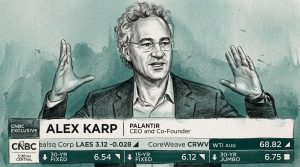
Alex Karp just told CNBC the AI industry is “effing insane.”
He’s right about one thing: AI isn’t overhyped, it’s mispriced. He’s also the guy selling you the fix....

Claude Fable 5: When Capability Meets Economics
Anthropic released Cloud Fable 5 with a paradox built in: safeguards sophisticated enough to let a mythosclass model...

Run Agentic AI Entirely on Your Mac—No Cloud, No Latency, No Privacy Tradeoffs
Apple’s MLX framework is mature enough now that you can run serious agentic AI workflows locally on Silicon...