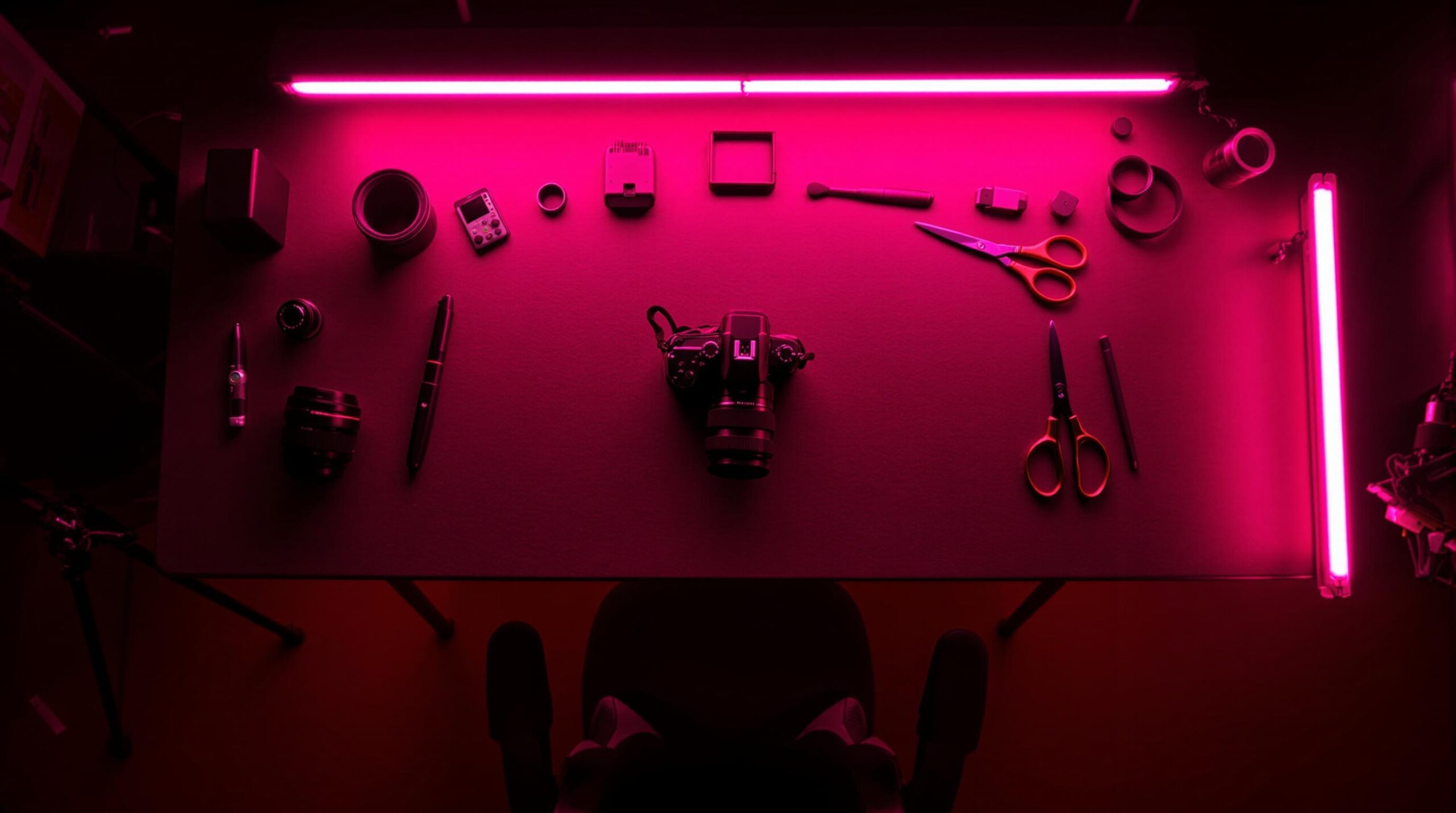

Remember when Photoshop first introduced the magic wand tool? That moment marked a fundamental shift in how we approached digital image editing – suddenly, complex selections became intuitive, point-and-click operations. Today, we’re standing at an even more significant threshold with the release of FLUX.1 Tools, a suite of AI models that’s not just improving image manipulation – it’s completely reimagining it.
Picture a master sculptor who can reshape clay with just a whispered instruction, or a painter whose brush responds directly to thoughts rather than hand movements. This isn’t just metaphorical thinking – it’s precisely what FLUX.1 Tools brings to digital imagery: the ability to modify, expand, and reimagine images through natural language commands. But unlike the mystique of artistic intuition, this transformation is powered by breakthrough AI architecture and rigorous scientific advancement.
The Four Pillars of Creative Revolution
At its core, FLUX.1 Tools introduces four distinct capabilities that work in concert to create a comprehensive image manipulation ecosystem:
FLUX.1 Fill: Reimagining Image Completion
Think of FLUX.1 Fill as an AI-powered healing brush that understands context at a deeper level. While traditional inpainting tools struggle with complex patterns and maintaining global coherence, FLUX.1 Fill has demonstrated unprecedented capabilities in benchmark testing. It has surpassed every competing solution, including Ideogram 2.0 and AlimamaCreative’s implementations, by understanding not just pixel values but the semantic meaning of the images it modifies.
FLUX.1 Depth and Canny: The Structural Foundation
These tools function like an artist’s innate understanding of form and structure. While other models might treat images as flat canvases, FLUX.1 Depth and Canny maintain the fundamental architecture of the scene. In direct comparisons with industry standards like Midjourney ReTexture, FLUX.1 Depth [pro] has demonstrated superior versatility while maintaining structural fidelity. This isn’t just about preserving edges or depth – it’s about understanding the three-dimensional reality that two-dimensional images represent.
FLUX.1 Redux: The Universal Translator
Perhaps the most intriguing component, FLUX.1 Redux acts as a universal translator between text prompts and visual elements. It enables sophisticated image variations that maintain the essence of the original while incorporating new artistic directions. When combined with FLUX1.1 [pro] Ultra’s 4-megapixel output capabilities and flexible aspect ratios, it opens up unprecedented possibilities for creative expression.
Democratizing Digital Creation
What makes this release particularly significant is BFL’s innovative dual-track approach. The [pro] variants push the boundaries of what’s possible, setting new standards for professional-grade image manipulation. Meanwhile, the [dev] versions – available under the Flux Dev License – ensure the technology remains accessible to researchers and developers, fostering innovation and experimentation.
The integration with partners like fal.ai, Replicate, Together.ai, Freepik, and krea.ai ensures these tools will be widely available and practically applicable across different platforms and workflows. This widespread accessibility, combined with the technical capabilities of the tools, positions FLUX.1 Tools as a potentially transformative force in creative workflows.
Looking Forward: The New Visual Language
We’re witnessing more than just the release of new tools – we’re seeing the emergence of a new visual language. The boundary between imagination and execution is becoming increasingly transparent, where technical expertise becomes less of a barrier to visual expression. Just as word processors transformed writing from a mechanical to a purely creative process, FLUX.1 Tools is elevating image manipulation from technical execution to pure creative intent.
The implications extend far beyond professional creative workflows. This technology represents the democratization of advanced image manipulation, where the limiting factor isn’t technical skill but creative vision. The future of image manipulation isn’t about better brushes or more precise selection tools – it’s about speaking the language of creativity fluently, where your artistic vision can be expressed as naturally as describing it to a friend.
With FLUX.1 Tools, that future isn’t just closer – it’s here. The question isn’t whether these tools will transform visual creation – it’s how quickly and in what unexpected ways they’ll be adopted. As we stand at this threshold of a new era in digital creation, one thing is clear: the dialogue between human creativity and artificial intelligence has never been more fluent, more powerful, or more accessible.
The revolution in digital creation isn’t just about better tools – it’s about breaking down the barriers between imagination and reality, between concept and creation. FLUX.1 Tools isn’t just another suite of image editing tools; it’s a new language for visual creativity, and everyone is invited to join the conversation.
More like this
Which Job Gets Its 1000X Next
Somewhere out there is a developer shipping in a week what used to eat a team for a...
Treebeard Is Waking Up To AI
There is a particular kind of person you learn to distrust in business: the one who urges everyone...
Claude 5 Fable Vibe Check: Anthropic Opens the Door to a Mythos-Class Model
On June 9, 2026, Anthropic did something it had spent two months publicly hesitating to do: it put...