AI’s 5-Year Growth & Why Every Business Model Could Be About to Change

Anthropic CEO’s Radical Prediction: The Next Wave of AI Won’t Take Decades to Transform Business—It Could Happen Before 2030
When Paul Allen and Bill Gates founded Microsoft in 1975, they set an audacious mission: “A computer on every desk and in every home.” At the time, it seemed absurdly ambitious. Today, we carry computers far more powerful than those early PCs in our pockets.
Now, the artificial intelligence industry stands at a similar inflection point. But according to Anthropic CEO Dario Amodei, the transformation ahead could make the PC revolution look like a minor prelude. In a sweeping new essay, Amodei lays out a vision for how AI could reshape society within just 5-10 years of achieving human-level capabilities – a milestone he believes could arrive as soon as 2026.
For business leaders, the implications are staggering. Imagine compressing 50-100 years of technological progress into half a decade. While many focus on AI’s risks, Amodei argues we’re underestimating its potential upside. Here’s what that could mean for how we work, compete, and create value.
The New Innovation Timeline: Months, Not Decades
Today, bringing breakthrough innovations to market – whether new drugs, materials, or technologies – typically takes years or decades of R&D. But AI could fundamentally change that equation.
Think of it as adding millions of genius-level researchers and engineers to your team, working 24/7 at superhuman speeds. These AI systems won’t just analyze data faster – they’ll design experiments, control lab equipment, and iterate on solutions in ways that could compress years of trial and error into weeks or months.
I think that most people are underestimating just how radical the upside of AI could be, just as I think most people are underestimating how bad the risks could be.
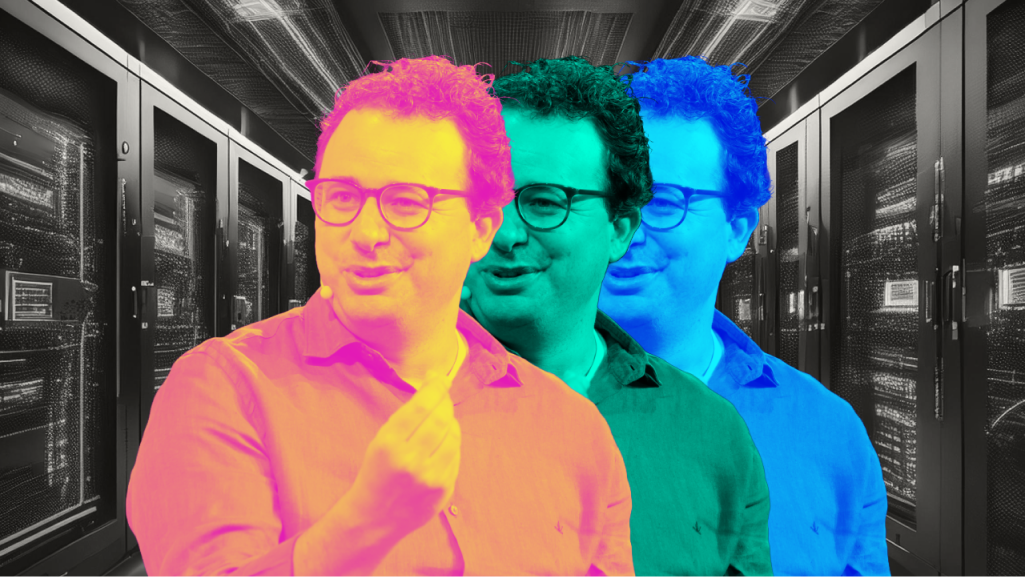
Dario Amodei CEO Anthropic
For pharmaceutical companies, this could mean developing new drugs at unprecedented speeds. For manufacturers, it could enable rapid innovation in materials and production processes. The companies that harness this capability effectively won’t just have an edge – they’ll be playing a completely different game.
The Great Leveling
Perhaps counterintuitively, this technological acceleration could actually level certain playing fields. Today, only the largest companies can afford massive R&D operations. But AI could democratize innovation capabilities, allowing smaller players to compete more effectively.
Consider a small biotech startup. Instead of needing hundreds of researchers and expensive labs, they might leverage AI to accomplish similar work with a smaller team and more focused resources. The key competitive advantage shifts from raw research capacity to how effectively companies can define problems and guide AI systems toward solutions.
The Human Factor: New Skills, New Roles
This doesn’t mean humans become irrelevant – far from it. But the nature of human work will likely shift dramatically. Instead of doing the research directly, humans will increasingly focus on asking the right questions, setting strategic direction, and interpreting AI outputs in business contexts.
Think of it like the transition from manual drafting to CAD software. Engineers didn’t disappear; they became more productive and focused on higher-level design decisions. Similarly, future knowledge workers might spend less time on analysis and more time on judgment, creativity, and interpersonal skills that remain uniquely human.
Beyond Productivity: New Markets and Models
The most profound changes might come from entirely new markets created by AI capabilities. Just as smartphones enabled the rise of companies like Uber and Instagram, advanced AI could enable business models we can barely imagine today.
Amodei suggests AI could enable personalized mental health coaching, radical improvements in education, and new forms of entertainment and creative expression. The first companies to successfully commercialize these possibilities could become the tech giants of tomorrow.
The Global Impact
For multinational businesses, AI’s potential impact on global development could reshape market opportunities. Amodei suggests AI could accelerate economic growth in developing countries to unprecedented rates – potentially 20% annually. This could rapidly expand the global middle class, creating new consumers and business opportunities.
Preparing for AI In Your Business
So how should business leaders prepare? A few key principles emerge:
- Think Bigger: The pace and scale of change could be far more dramatic than most current business planning assumes.
- Focus on Guidance: Start developing the skills to effectively direct and leverage AI systems rather than just treating them as faster analytical tools.
- Watch for Inflection Points: The shift could happen surprisingly quickly once certain AI capabilities are achieved. Having contingency plans and flexible strategies will be crucial.
- Consider Second-Order Effects: Beyond direct AI applications, consider how accelerated innovation in other fields could affect your industry.
The Ultimate Competitive Advantage
Perhaps most importantly, leaders need to understand that this isn’t just another technology trend to monitor. If Amodei’s vision proves even partially correct, it represents a fundamental reformation of how value is created and captured in the economy.
The companies that thrive won’t necessarily be the ones with the most AI expertise, but those who best understand how to harness these capabilities to solve real human needs and create meaningful value. In that sense, the fundamentals of business success remain unchanged – even as everything else transforms around us.
The next five years could rewrite the rules of business as thoroughly as the previous fifty. The question isn’t whether to prepare for this transformation, but how quickly you can start.
More like this

Which Job Gets Its 1000X Next
Somewhere out there is a developer shipping in a week what used to eat a team for a...

Treebeard Is Waking Up To AI
There is a particular kind of person you learn to distrust in business: the one who urges everyone...

Claude 5 Fable Vibe Check: Anthropic Opens the Door to a Mythos-Class Model
On June 9, 2026, Anthropic did something it had spent two months publicly hesitating to do: it put...